No one should be left behind.
To create a future where every child and community, regardless of how remote their village is, has the opportunity to connect, learn, and grow through access to the digital world.
Bringing affordable, reliable internet connectivity to underserved rural communities in Indonesia—so every child can access knowledge, and every community can reach new opportunities.
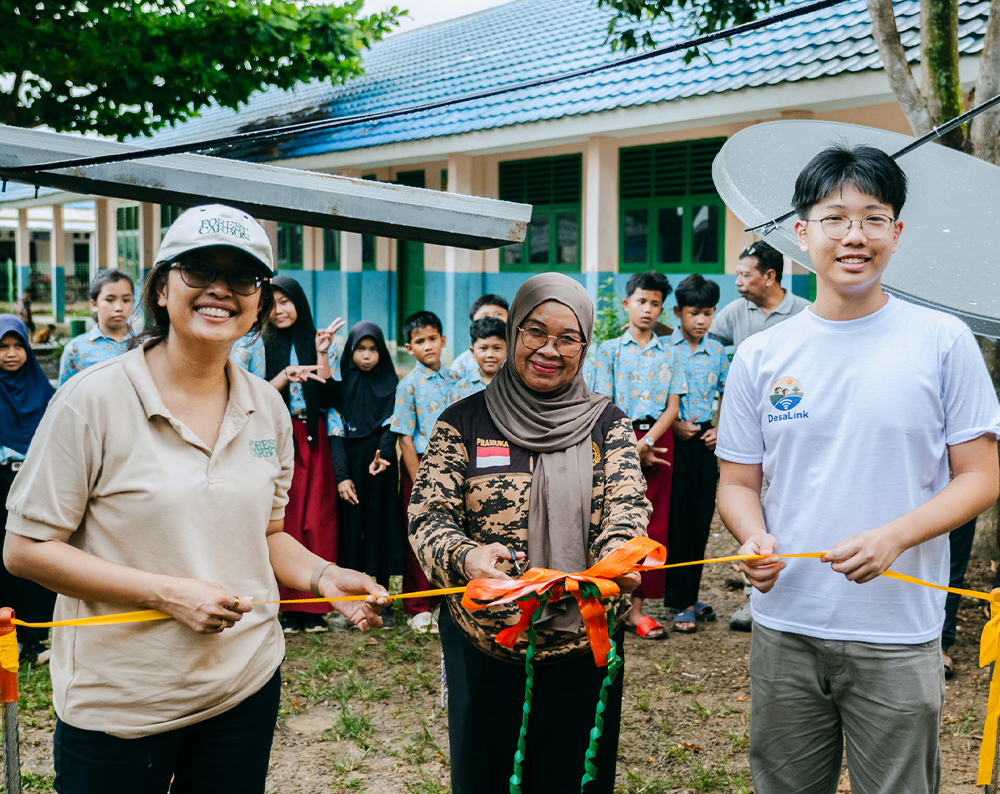
The idea for DesaLink began during my internship with Forest Carbon, a nature-based conservation company with a flagship project in Kepayang Village, Musi Banyuasin Regency, South Sumatra.
Before visiting the project site, I had assumed that communities in Sumatra, being relatively close to Java and Jakarta, would have reasonable access to basic infrastructure. What I saw when I arrived completely changed my perspective. I never imagined that communities located not so far from Indonesia’s most populated island could still be so isolated, with extremely limited connectivity and no reliable access to electricity.
What affected me most was seeing how these limitations impacted children and their education. Many schoolchildren in the area have limited educational facilities and opportunities to continue their studies beyond secondary school. I began to think: if we cannot immediately bring more schools and teachers to every remote village, perhaps we can bring the world of education to them through the internet.
That realization became the starting point of DesaLink.
Through DesaLink, I want to bring affordable and reliable internet connectivity to underserved rural communities. For students, internet access can open a window to educational resources, online learning, and knowledge that would otherwise be beyond their reach. It can give them the opportunity to learn beyond the physical boundaries of their village and, hopefully, encourage more of them to pursue higher levels of education.
The impact can extend beyond education. For families and other members of the community, connectivity can create access to economic opportunities, useful health information, communication with people outside the village, and even faster access to assistance during emergencies. In this way, internet connectivity is not simply about being online, it can become an important tool for improving people's quality of life.
However, bringing connectivity to such remote locations presents another challenge. Conventional internet and electricity infrastructure may not be available, which means DesaLink needs to rely on satellite-based internet supported by off-grid power solutions.
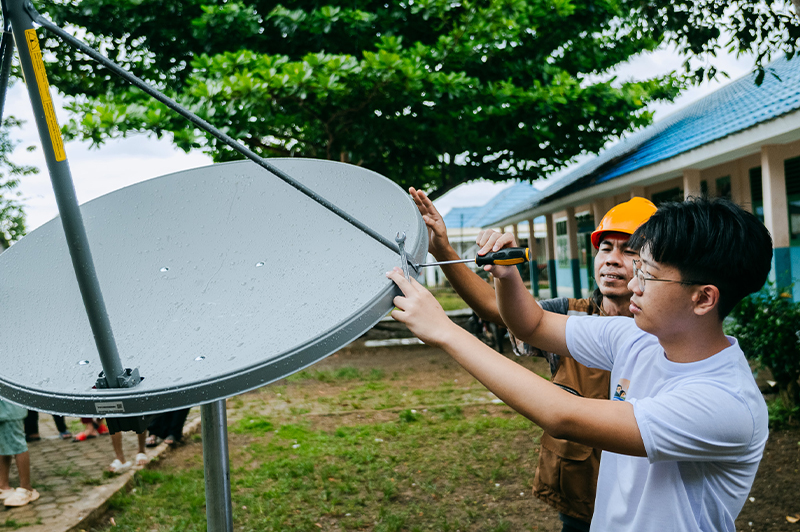
My goal is therefore not only to bring connectivity to these communities, but to find a model that is affordable, practical, and scalable. I am exploring ways to keep costs as low as possible by sourcing components locally and using DIY solutions wherever practical, including solar-powered systems for villages without reliable electricity.
Ultimately, DesaLink is built around one simple belief: where a child is born should not determine how much knowledge or opportunity they can access. No one should be left behind.
DesaLink believes that access to the digital world should not be determined by geography.
To create a future where every child and community, regardless of how remote their village is, has the opportunity to connect, learn, and grow through access to the digital world.
by bringing affordable and reliable internet access to remote villages where conventional connectivity is limited or unavailable.
by enabling students to reach online learning resources, knowledge, and opportunities beyond the boundaries of their villages.
by using connectivity to improve access to information, economic opportunities, healthcare information, communication, and emergency assistance.
by combining satellite internet, solar power, locally sourced components, and simple DIY approaches to reduce the cost of connecting remote communities.
starting small, learning from each community, and improving the solution so that DesaLink can eventually reach more underserved areas across Indonesia.
Conventional internet and electricity infrastructure may not be available in remote locations. DesaLink is exploring a flexible approach built around practical needs and affordability.
Our approach is exploratory: start with real community needs, learn what works, and keep making the solution more practical and affordable.
DesaLink’s initial installations are planned around two community touchpoints: a place for children to learn and a place for the village to connect.
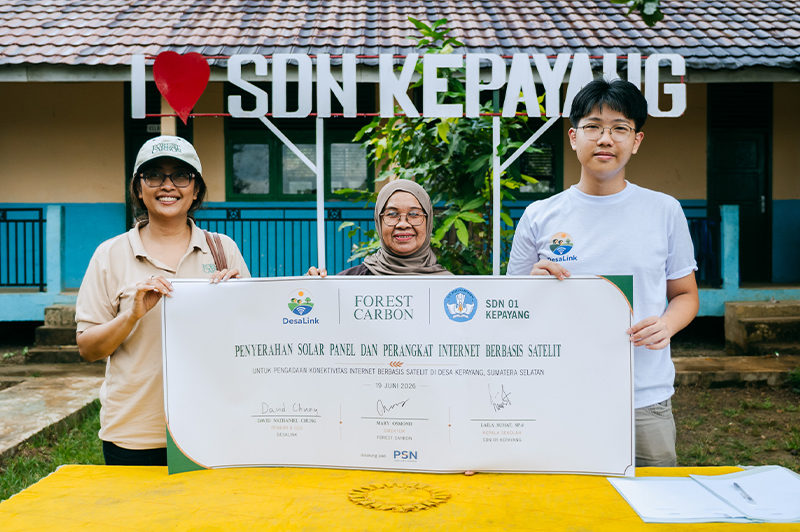
Connecting students with digital learning resources and knowledge beyond the physical boundaries of their village.
Schoolchildren reached: To be confirmed
Teacher testimonial: To be added
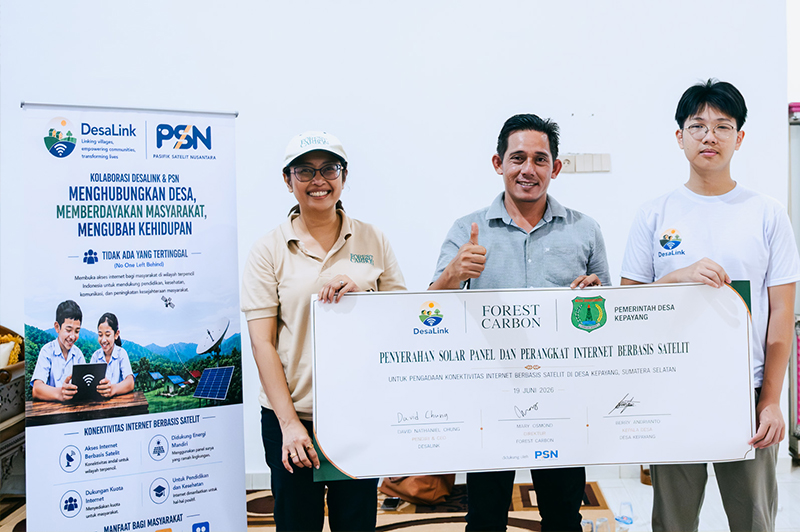
Helping community members access useful information, communicate beyond the village, and explore new opportunities.
Village population: To be confirmed
Households reached: To be confirmed
Village head testimonial: To be added
.
DesaLink’s impact begins with access—to learning, information, and new opportunities. Confirmed community and installation data will help tell that story clearly.
By addressing digital access and information gaps, DesaLink aligns its goals with five United Nations Sustainable Development Goals.
I am originally from Lampung, a province on the island of Sumatra, Indonesia. I feel privileged to have the opportunity to pursue my education in Jakarta, the capital city of Indonesia, where I have access to opportunities and resources that are not always equally available to young people in other parts of the country.
Growing up with roots outside a major city has made me more aware of the challenges faced by communities in remote and underserved areas. It has also inspired me to contribute to creating more equal opportunities for them.
I believe one of the most powerful ways to do this is through connectivity. Bringing internet access to remote communities can open doors to new economic opportunities, improve livelihoods, and connect people to the wider world. For schoolchildren in particular, connectivity can become a window to the world, giving them access to knowledge, educational resources, and opportunities far beyond the boundaries of their communities. This belief has become a principle that I want to carry with me in everything I do: No one should be left behind.
Interested in supporting affordable connectivity, education, or community-led digital access?